Articles
Legal treatment of solid waste in Brazil and the quality of water resources
- Quérfane Tainara Limeira de Sá1 ORCID profile of Quérfane Tainara Limeira de Sá
- Jéssica Lee Abreu Magalhães de Sá Teschi2 ORCID profile of Jéssica Lee Abreu Magalhães de Sá Teschi
- Heloíse Siqueira Garcia3 ORCID profile of Heloíse Siqueira Garcia
- 1 Public Prosecutor’s Office of the State of Rondônia, Prosecutor General of Justice, Porto Velho, RO, Brazil
- 2 Public Prosecutor’s Office of the State of Rondônia, Support Group of the Superior Council, Porto Velho, RO, Brazil
- 3 Universidade do Vale do Itajaí, Itajaí, SC, Brazil
Abstract
Solid waste management is an issue of great relevance for both the environment and public health, in Brazil and worldwide. This article aims to provide the main information on the legal treatment of solid waste in Brazil and the quality of water resources. We will address the objectives and guidelines of the National Solid Waste Policy (PNRS), showing how good waste management practices improve the quality of water resources. Furthermore, the crucial role of the National Water Agency (ANA) and the National Water Resources Policy (PNRH) in water protection will be analyzed and their contributions to environmental sustainability. Finally, we will highlight the importance of environmental education, sustainability and the adoption of innovative policies in solid waste management, to guarantee water quality, preserving the lives of all beings and protecting the environment. Regarding methodology, the research adopted inductive and Cartesian methods, in the investigation and data analysis phases, respectively.
Keywords: Fundamental Rights; water protection; sustainability; quality of life
Introduction
Solid waste management stands out as a highly relevant issue on the global stage, both for the environment and for public health. Based on this perspective, the present research aims to comprehensively explore the legal treatment of solid waste in Brazil and its consequent influence on the quality of water resources.
Despite the guidelines established by the National Solid Waste Policy, many are unaware of the real impact of these practices on the quality of water resources in Brazil. Thus, this study seeks to investigate how the implementation of the PNRS effectively influences water quality and public health in different regions of the country.
The central hypothesis of this article is that solid waste management aligned with the National Solid Waste Policy (PNRS), together with the actions of the National Water Agency (ANA) and the National Water Resources Policy (PNRH), results in a substantial improvement in the quality of water resources.
Initially, this article will address the definition of Solid Waste and the main objectives and guidelines established by the National Solid Waste Policy (PNRS), in order to demonstrate how effective management practices can significantly contribute to improving water quality and protecting the environment.
Therefore, this study will focus on the fundamental role played by ANA and PNRH in the protection and preservation of water resources. The relevance of these institutions will be highlighted, emphasizing their contributions to environmental sustainability.
Furthermore, the article will address the importance of environmental education and the implementation of innovative policies in solid waste management, with the aim of ensuring the preservation of water quality, essential for the life of all living beings in the present and future generations.
Moreover, examples of good management practices will be presented that illustrate the positive correlation between the proper management of solid waste and the improvement in the quality of water resources. In this way, this study is expected to provide a comprehensive overview of the interactions between legislation, waste management, and water protection, helping citizens to see that the combined efforts of civil society and public authorities are extremely necessary for the formulation of more efficient and sustainable public policies and, consequently, for the good of all.
Regarding the methodological approach, the study follows the guidelines of Pasold (2018), adopting the inductive method during the investigation phase and the Cartesian method in the data analysis stage. In addition, techniques such as the referent, categorization, definition of operational concepts, and bibliographic research are used.
1. The fundamental human right to water.
Water is an essential resource for the life and well-being of all beings. Although the 1988 Brazilian Federal Constitution does not explicitly mention access to water as a fundamental right, it is essential to interpret that this guarantee is intrinsically included in the provisions that ensure the rights to life, health, a balanced environment, and human dignity. Without water, the exercise of these rights becomes impossible (Oliveira, 2024).
Corroborating this statement, Lenzi, Favero and Luchesi (2009, p.3) state that:
On Earth, water is the precursor to life. Life originated in water, and only after a long time and the development of complex mechanisms was it able to move to land. It is through water that nutrients reach the roots of plants, travel through organisms, via the blood in animals and the sap in plants, reaching the cells. Water is the main substance of the cell cytoplasm. Through water, animals eliminate toxins from their bodies and regulate their temperature. Therefore, it is impossible to conceive of life, as we know it, without water.
The second postulate makes it clear that Legal Policy always seeks a criterion of justice and utility of the legal norm, aspects that will be considered in this article.
It is also clear that Legal Policy seeks to bring about changes in normative and social reality, as foreseen in the fifth postulate.
Júlio César Machado Ferreira de Melo (2022, p. 26) states that:
[...] for the purposes of Operational Concept, we will use [...] the term “Legal Policy” [...] faithful to the thinking of Osvaldo Ferreira de Melo, who defined it as:
“The set of strategies aimed at producing the content of the norm, and its adaptation to the values of Justice and Social Utility, whose scope is given in a complex of measures that aim at correcting, repealing or proposing legal norms.”
Given its immense importance, a recent proposed amendment to the Constitution seeks to make access to potable water a fundamental right, guaranteeing livelihoods, well-being, and socioeconomic development (Brazil, 2021), with the latest legislative progress occurring on June 20, 2024, according to research on the Chamber of Deputies website.
Regarding the essential nature of water, Garcia and Waltrick (2022, p. 3) highlight that:
It goes without saying that water is a fundamental resource for the existence of life as we know it. Life flourished in water, and it would be difficult to imagine the existence of any form of life in the absence of this vital resource.
Globally, the right to water is supported by various international human rights instruments. The Universal Declaration of Human Rights, promulgated in 1948 (UN, 1948), in its Article 252, implies this right by ensuring an adequate standard of living that includes health and well-being. Therefore, water is necessary for the survival and quality of life of all beings. The International Covenant on Economic, Social and Cultural Rights, through General Comment No. 15 of 2002, explicitly affirms water as a human right (UN, 2002). Furthermore, UN General Assembly Resolution A/RES/64/292 of July 28, 2010, recognizes safe drinking water and sanitation as essential human rights (UN, 2010).
To be effective, the right to water must be guaranteed in four main dimensions: accessibility, availability, safety, and acceptability, as outlined in General Comment No. 15 (2002) of the United Nations Committee on Economic, Social and Cultural Rights (CESCR). Accessibility refers to physical and economic access to water without discrimination. Availability ensures that the quantity of water is sufficient and continuous for daily needs. Safety implies that the water is free from harmful contaminants. Acceptability addresses the need for water supply facilities and services to be culturally appropriate and respect the dignity and privacy of individuals.
However, the implementation of this right faces numerous challenges. Water scarcity, pollution, climate change, lack of adequate infrastructure, and social inequalities are significant obstacles. According to Morlin and Euzébio (2018, p. 7), “both in Brazil and in other countries, the persistence of such problems regarding the quantity and quality of water will likely lead to serious social conflicts over the dispute for this resource.” Thus, effective public policies and sustainable water resource management are essential to address these challenges. Cooperation between governments, international organizations, and civil society plays an important and unavoidable role in this context.
The importance of water as a fundamental right is even more evident in regions where access to it is limited. As Marques Júnior (2016) states, in addition to scarcity and poor quality for proper use, water is not distributed equally. According to Venturini (2012, p. 196-197), besides the small percentage of fresh water available for human consumption and the existence of localities where water resources are abundant, “scarcity can trigger national and international conflicts (wars).”
Thus, water is a fundamental human right that sustains life and human dignity. Enabling the promotion and protection of this right requires a global commitment, taking into account social, economic, and environmental aspects, in order to guarantee universal access to drinking water and sanitation and, consequently, to fundamental human rights.
2 Solid waste – concepts and classifications
Waste generation has accompanied humanity since its earliest settlements (Toneto Júnior; Saiani; Dourado, 2014), with waste production being “inseparable from the activities carried out by man, both in time and space” (Waldman, 2010, p. 11). Notwithstanding this assertion—that it is entirely linked to life itself, to the daily activities of all beings—the inappropriate management of solid waste negatively affects the environment and public health, and is even a direct problem for the supply and quality of water provided to the population (Jardim; Yoshida; Machado Filho, 2012).
According to the World Health Organization (2023), in 2023, 1.5 billion people still lack basic sanitation services, with 419 million of them defecating in the open, and 1.4 million people dying each year due to inadequate drinking water, sanitation and hygiene, with the majority of these deaths occurring in low- and middle-income countries.
According to the report presented by the Brazilian Association of Public Cleaning and Special Waste Companies (ABRELPE), in 2022, approximately 81.8 million tons of municipal solid waste (MSW) were produced in Brazil (ABRELPE, 2022), which corresponds to a production of 381 kilograms of waste per inhabitant (Sá; Lazzari; Nunes, 2023).
Although legal doctrine does not specifically define what constitutes solid waste, Law No. 12,305, of August 2, 2010 (Brazil, 2010), provides the following definition:
[...] material, substance, object or discarded good resulting from human activities in society, whose final destination is being proceeded with, is proposed to be proceeded with, or is required to be proceeded with, in solid or semi-solid states, as well as gases contained in containers and liquids whose particularities make their discharge into the public sewage system or into bodies of water unfeasible, or require technically or economically unfeasible solutions in light of the best available technology.
According to José Ariel Galvis Gonzáles (2016, p. 110), solid waste is any “material intended for abandonment by its producer or possessor, which may result from a process of manufacturing, transformation, use, consumption, or cleaning.”
Thus, solid waste is defined as waste resulting from industrial, domestic, hospital, commercial, agricultural, service, and street sweeping activities, including sludge from water treatment systems, as well as liquids that are unviable to discharge into the public sewage system or water bodies, or those that require technically and economically unfeasible solutions in light of the best available technology (ABNT, 2014).
Spanish Law No. 22/2011, of July 28, 2011, deals with waste and contaminated soil in Spain, regulating waste management, including transport, disposal and recovery, with the aim of protecting human health and the environment.
The aforementioned law provides several definitions of waste. Among the most common, we can mention waste proper and household waste. The concept presented by the Law is that the former is “any substance or object that its possessor discards or intends or is required to discard” and the second is “generated in households as a consequence of domestic activities. Waste similar to the aforementioned, generated in services and industries, is also considered household waste” (Spain, 2011).
Following the definition of waste, Luis Paulo Sirvinskas (2017, p. 480) states that it is “all material resulting from the daily activities of man living in society and can be found in solid, liquid and gaseous states”.
Despite the fact that most people confuse the terms “garbage” and “solid waste,” Giovan Beatriz Riehs Lucaora (2021, p. 109) highlights the difference between the terms, since the former is important in commerce and the latter refers to any material rejected by its producer that “no longer has value”.
Regarding classification, the National Solid Waste Policy Law (PNRS), in its article 13, divides them according to origin and hazardousness. The first classification (origin) is detailed in item I, as outlined below:
I - Regarding the origin:
a) Household waste: waste originating from domestic activities in urban residences;
b) urban cleaning waste: waste originating from street sweeping, cleaning of public spaces and roads, and other urban cleaning services;
c) municipal solid waste: those included in points “a” and “b”;
d) waste from commercial establishments and service providers: waste generated in these activities, excluding those referred to in subparagraphs “b”, “e”, “g”, “h” and “j”;
(e) waste from public sanitation services: waste generated in these activities, excluding those referred to in subparagraph “c”;
f) Industrial waste: waste generated in production processes and industrial facilities;
g) healthcare waste: waste generated in healthcare services, as defined in regulations or standards established by the bodies of Sisnama and SNVS;
h) Construction waste: waste generated during the construction, renovation, repair, and demolition of civil construction works, including waste resulting from the preparation and excavation of land for civil works;
i) Agro-silvo-pastoral waste: waste generated in agricultural and forestry activities, including waste related to inputs used in these activities;
j) waste from transport services: waste originating from ports, airports, customs terminals, road and rail terminals, and border crossings;
k) Mining waste: waste generated during the research, extraction or processing of ores (BRAZIL, 2010).
Regarding hazardousness, as a second classification criterion, the legislation provides the following definition:
II - Regarding hazardousness:
a) hazardous waste: waste which, due to its characteristics of flammability, corrosiveness, reactivity, toxicity, pathogenicity, carcinogenicity, teratogenicity and mutagenicity, presents a significant risk to public health or environmental quality, according to law, regulation or technical standard;
b) Non-hazardous waste: waste not covered by point “a”.
Sole paragraph. Subject to the provisions of article 20, the waste referred to in subparagraph “d” of item I of the main clause, if characterized as non-hazardous, may, due to its nature, composition or volume, be equated to household waste by the municipal public authority.
In turn, the Brazilian Association of Technical Standards (ABNT, 2014) points out that this refers to waste that, due to its physical, chemical, or infectious properties, presents a risk to public health, as well as causing a risk to the environment if managed improperly. Thus, hazardousness involves waste that possesses certain characteristics that, if present, make a given material hazardous, requiring differentiated treatment, since it presents risks to public health and the environment (Soler; Silva Filho, 2019). It is, therefore, the best-known form of classification and is constantly used in environmental documents (Lima, 2021).
Regarding these characteristics, Soler and Silva Filho (2019, p. 59) list some observed within the scope of Directive 2008/98/EC (Annex III) of the European Union:
a) Flammability: characteristic of substances that can easily ignite and continue to burn or burn even after the source of ignition has been removed;
b) Corrosiveness: characteristic of substances that can destroy living tissue upon contact;
c) Reactivity: characteristic of unstable substances that react suddenly with water and generate toxic gases, vapors, and fumes in sufficient quantities to cause harm to public health or the environment;
d) Toxicity: characteristic of substances whose inhalation, ingestion, or skin penetration can represent a serious, acute or chronic risk to health and even cause death;
e) Pathogenicity: characteristic of substances that contain microorganisms, toxins, or other elements that are known, or there is good reason to believe, to cause disease in humans or other living organisms;
f) Carcinogenicity: characteristic of substances whose inhalation, ingestion, or skin penetration can cause, promote, or increase the incidence of cancer;
g) Teratogenicity: characteristic of substances whose inhalation, ingestion, or skin penetration can induce non-hereditary congenital malformations in an embryo or fetus or increase their occurrence;
h) Mutagenicity: characteristic of substances whose inhalation, ingestion, or skin penetration can induce hereditary genetic defects or increase their occurrence.
Law No. 11,353/06 was updated by Law No. 13,840/19, which established the National System of Public Policies on Drugs and the conditions for providing care to drug users or addicts, and addressed the financing of drug policies.
The United Nations Convention against Transnational Organized Crime resulted from the Palermo Convention, held from May 12 to 15, 20003.
The Convention introduced the concept of organized crime in item “a” of article 2 and transnational crime in paragraph 2 of article 3:
a) Flammability: characteristic of substances that can easily ignite and continue to burn or burn even after the source of ignition has been removed;
b) Corrosiveness: characteristic of substances that can destroy living tissue upon contact;
c) Reactivity: characteristic of unstable substances that react suddenly with water and generate toxic gases, vapors, and fumes in sufficient quantities to cause harm to public health or the environment;
d) Toxicity: characteristic of substances whose inhalation, ingestion, or skin penetration can represent a serious, acute or chronic risk to health and even cause death;
e) Pathogenicity: characteristic of substances that contain microorganisms, toxins, or other elements that are known, or there is good reason to believe, to cause disease in humans or other living organisms;
f) Carcinogenicity: characteristic of substances whose inhalation, ingestion, or skin penetration can cause, promote, or increase the incidence of cancer;
g) Teratogenicity: characteristic of substances whose inhalation, ingestion, or skin penetration can induce non-hereditary congenital malformations in an embryo or fetus or increase their occurrence;
h) Mutagenicity: characteristic of substances whose inhalation, ingestion, or skin penetration can induce hereditary genetic defects or increase their occurrence.
Proper mapping of waste and associated risks is fundamental, as it helps in implementing effective strategies to minimize environmental impacts. By understanding the operations involved—such as segregation, packaging, storage, transport, and disposal—and applying appropriate safety practices, it is possible to avoid incidents, contamination, and economic losses that can result from inadequate management and lack of technical knowledge of the waste produced (Barbosa; Ibrahin, 2014).
3. National Solid Waste Policy in Brazil
As Heloise Siqueira Garcia (2024, p. 80) points out, the problem of the generation and inadequate management of solid waste is becoming increasingly evident:
[...] highlighting the great phenomenon of urbanization, which has intensified in recent decades, coupled with increasing industrial activity and the growth in the consumption of goods and their disposal when they could still be useful, which ends up considerably affecting the structure of environments, causing various problems related to health, housing and leisure, points that are essential to guaranteeing quality of life.
According to Bastos and Matos (2021), the absence of a specific regulatory framework for the management of urban solid waste, up until 2010, was a major factor in making the problem of solid waste so prevalent in Brazil, greatly hindering the implementation of public policies, as well as the State’s oversight of the actions of the private sector.
In Brazil, Law No. 12.305/2010, of August 2, 2010, established the National Solid Waste Policy (PNRS), with the objective of “solving the environmental, social and economic problems in Brazilian municipalities—whether small, medium or large—arising from the inadequate management of urban solid waste over time”.
The aforementioned law outlines guidelines for the proper management and handling of solid waste, including hazardous waste, and delineates the responsibilities of waste producers and government authorities, as well as the economic instruments that can be employed in this context (Brazil, 2010).
As Heloise Siqueira Garcia (2015, p. 68) points out, “[...] basically the purpose of the Law is to establish the PNRS, bringing principles, objectives and instruments; to address the integrated management and handling of solid waste and to determine the responsibilities and applicable instruments”.
Regarding the fundamental principles of the PNRS (National Solid Waste Policy), these include precaution and prevention, the polluter-pays and protector-receiver principles, shared responsibility, integrated solid waste management, cooperation between different levels of government, and the recognition of reusable and recyclable solid waste as an economic asset and of undeniable social value, among others.
The aforementioned principles unequivocally guide the development, implementation, and execution of actions aimed at achieving maximum sustainability and responsible and efficient management of solid waste, promoting the reduction in generation, proper disposal, and valorization of waste as essential factors for an environmentally healthy and socially balanced water system.
Denise Schmitt Siqueira Garcia (2014) teaches us that sustainability instinctively alludes to a mode of social action that is independent of the economic model it adopts, and aims at the permanence of the human species on the Planet in dignified and just conditions.
It is crucial to emphasize that it is the duty of all sectors of society, together with government agencies, to work towards these principles to guarantee a sustainable future and preserve natural resources for future generations (Andrade; Dias, 2024).
In addition to federal legislation, states and municipalities have legislative authority to establish complementary regulations aimed at the proper management of solid waste within their territories, according to their local realities.
Many states have their own laws regulating selective collection, final disposal of waste, the creation of integrated management plans, and other measures that directly impact water quality. The diversity of state and municipal legislation reflects the complexity of the Brazilian regulatory landscape regarding solid waste and its impacts on water quality (Costa, 2024).
Federal law mandates that generators of solid waste are responsible for segregating waste at the source, properly packaging it, and correctly disposing of each type of waste. Companies that transport and dispose of waste also have specific obligations, including ensuring the safety and proper disposal of materials.
Furthermore, municipal entities have the responsibility to promote integrated solid waste management within their territories, implementing selective collection and environmentally sound disposal, and promoting the inclusion of recyclable material collectors. All these actors are also responsible for raising public awareness about the importance of proper solid waste management, that is, promoting Environmental Education in the country in a continuous and general manner.
This is because “maintaining a healthy and harmonious environment depends on human actions. Man is an essential element of the ecosystem, and the decisions we make today will define the future of the next generations” (Sá; Teschi; Miranda, 2024, p. 11).
Recently, the National Solid Waste Policy (PNRS) underwent changes with Law 14.026/2020, which established new guidelines for the basic sanitation sector, including urban cleaning services and urban solid waste management.
The New Legal Framework for Basic Sanitation modified four aspects related to solid waste management in Brazilian municipalities, namely: the need for regionalized service provision through intermunicipal public consortia; the definition of a deadline for establishing charges for the management of Municipal Solid Waste; the extension of the deadline for the revision of Integrated Solid Waste Management Plans; and the establishment of new deadlines for the implementation of environmentally sound final disposal in sanitary landfills (Cruz, 2021).
However, the creation of a new public policy goes beyond mere legislative activity. It requires a change of mindset and a breaking of behavioral patterns rooted in our culture, which until now were tolerated and incorporated (Severini; Panosso Netto, 2022).
It is important to highlight that a thorough investigation carried out in the city of Altamira (PA) revealed that inadequate solid waste management increases the pollution of water bodies (G1, 2023). This is because the Belo Monte dam caused chemical changes in the Xingu River, with increased levels of heavy metals such as chromium, lead, and zinc, representing risks to the health of local populations. The change caused the death of local flora and fauna species—more than 85,000 fish between 2015 and 2019, according to the Federal Public Prosecutor’s Office (ClimaInfo, 2024).
The situation in Rio de Janeiro is no different. Guanabara Bay is profoundly affected by the dumping of solid waste from urban landfills and neighboring communities. The rivers in the basins that cross the most densely populated areas function as “open sewers” (Seixas; Melo, 2021, p. 7-8), harming water bodies and, consequently, the health of the population.
According to Dias and Mazza (2024), the city of São Paulo, with the largest population in the country, also has problems with solid waste disposal. The extent of the pollution plume in the Tietê River Hydrographic Basin, which crosses a large part of the state, showed a significant increase of 47 kilometers, going from 160 km in 2023 to 207 km in 2024.
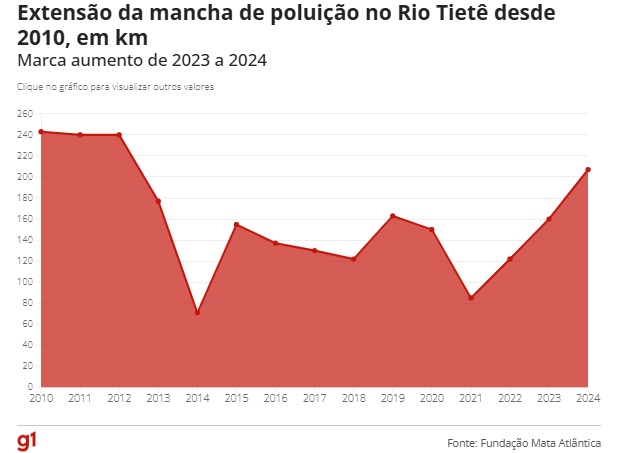
Water quality has significantly worsened in three locations along the headwaters of the Tietê River, encompassing Mogi das Cruzes, Suzano, and Itaquaquecetuba. In Mogi das Cruzes, one monitoring point went from “good” to “fair” quality, while another regressed from “fair” to “poor.” In the stretches of Suzano and Itaquaquecetuba, water quality deteriorated even further, going from “poor” to “very poor” in just one year. Furthermore, the Caiacatinga River in Itu also suffered a decline in quality, from “good” to “fair.” A critical event was recorded in the Piracicaba River, where, in addition to the worsening quality, thousands of fish died in an urban area on July 7th.
Luiz et al. (2024) argue that, in the Federal District, according to an investigation conducted by the Public Prosecutor’s Office, a total of 76 projects have caused significant environmental impacts due to the discharge of untreated sewage and sediments into the region’s rivers. The Environmental Prosecutor, Roberto Carlos Batista, highlighted that the silting process observed in the Lake Paranoá area represents serious damage to the management and preservation of water resources.
The public prosecutor states that:
The northern part of the lake is extremely important because it encompasses the National Park. Siltation in that portion of the lake will inevitably impact the water supply, because the quality and availability of water for supply must meet certain criteria and standards.
Notwithstanding the cases listed here, it should be noted that some cities have implemented significant initiatives for better waste management and, consequently, improved water quality.
Curitiba (PR): The city government implemented recycling and environmental education initiatives that significantly reduced the illegal dumping of waste, such as:
-
Ecocidadão (Eco-citizen): more than a thousand members benefit. Separation, sorting and sale for recycling and reuse take place. Each association receives a value per ton (Curitiba, 2024);
-
Câmbio Verde (Green Exchange): which promotes the exchange of recyclable material for fruits and vegetables. According to the City Hall, in the first six months of 2024, the program delivered 441 tons of organic products to 30,647 people (Curitiba, 2024).
-
Last year, Curitiba became a signatory to the commitment to eliminate waste generation (Lixo Zero/Zero Waste) alongside other mayors who are members of the C40 at the World Summit in Buenos Aires, Argentina (Curitiba, 2024).
In Brasília (DF), the Zero Waste program focuses on public awareness and ensuring effective solid waste management. This initiative has facilitated the segregation of organic and recyclable materials, resulting, in a way, in a considerable reduction in irregular disposal in the streams and rivers that feed Lake Paranoá (Correio Braziliense, 2024).
The president of the Brazilian Association of Underwater Sports and Fishing (DFSub), Marcelo Reisman, celebrated the cooperation with the initiative. “Seeing the community unite for such an important cause is truly inspiring” (Correio Braziliense, 2024).
In São Paulo (SP): The “Novo Rio Pinheiros” project was conceived to purify the Pinheiros River, one of the most critical rivers in the São Paulo Metropolitan Region. Since 2019, investments have been allocated to basic sanitation, garbage collection in riverside communities, and sewage treatment. “While Sabesp takes care of sewage disposal, a structural problem that demands large-scale solutions and works, a task force among other entities is simultaneously addressing the garbage problem.” Therefore, it is clear that waste disposal impacts the quality of water resources (Reis, 2019).
In the city of Porto Alegre/RS, with the aim of improving water distribution and reducing periods of shortage, especially during the warmer months of the year, the existing structure in the Ponta do Arado complex is being used immediately to improve sanitation, as highlighted by the general director of DMAE, Mauricio Loss (Porto Alegre, 2024).
Water Brazil Project – Various Regions: The Water Brazil Project, a collaborative initiative involving Banco do Brasil, WWF-Brazil, and other reputable organizations, advocates for the implementation of sustainable waste management practices in municipalities across various regions of the country. In the municipality of Pirenópolis (GO), for example, the restoration of springs was complemented by initiatives focused on composting and selective waste collection, thus mitigating the adverse effects of solid waste on aquatic ecosystems (WWF-Brazil, 2015).
This demonstrates that water and basic sanitation go hand in hand, in accordance with SDG 6, which aims to ensure the availability and sustainable management of water and sanitation for all by 2030.
4. Legal treatment of water quality in Brazil
The promulgation of the 1988 Brazilian Federal Constitution was the initial landmark in the regulation of water quality in Brazil, recognizing it as a vital public resource and establishing the responsibility of the public authorities to ensure its sustainable use, by establishing, in its Article 21, XIX and XX, that it is incumbent upon the Union to institute a national system for the management of water resources and to define criteria for granting rights to its use, as well as to establish guidelines for urban development, including housing, basic sanitation and urban transport.
As pointed out by Ivanildo de Oliveira (2024), the current Brazilian Federal Constitution extinguished private ownership of water and altered its ownership, making it a public good, thus not receiving article 526 of the 1916 Civil Code.
The 1988 Brazilian Federal Constitution (widely known as the “Citizen Constitution”) and Brazilian environmental legislation establish the legal bases for the protection and preservation of the environment, including water quality. These instruments define the rights and duties related to the use of water resources, as well as the competencies of the federative entities in environmental management. Furthermore, they establish fundamental principles for guaranteeing the quality of water resources, such as pollution prevention and the recovery of degraded areas, contributing to environmental sustainability and the economic development of the country.
Law No. 9,433/97, which established the National Water Resources Policy and created the National Water Resources Management System, was an important milestone for the management of this matter in Brazil. This is because it established principles, guidelines, and instruments for the implementation of said policy, aiming to guarantee the availability and quality of water. It also defined rules for classifying water bodies into use classes, establishing quality standards to be met, promoting the protection and recovery of water sources (Alves Junior, 2022).
In Brazil, the monitoring and enforcement of water quality is the responsibility of different institutions. The National Water Agency (ANA) plays a crucial role in this context, being responsible for coordinating and implementing the National Water Resources Policy, as well as regulating sanitation services (Brazil, 2024). Its activities involve the coordination and implementation of the National Water Resources Policy, the granting of water use rights, the monitoring of water body quality, and the development of water resources plans. It also plays an important role in regulating basic sanitation services, seeking to guarantee universal access to quality water.
State and municipal agencies also have specific competencies in inspection and monitoring, mainly regarding the management of water resources at the local level. Environmental control and inspection bodies, such as the Brazilian Institute of Environment and Renewable Natural Resources (Ibama) and state environmental agencies, play a fundamental role in controlling and combating pollution and other sources of water contamination, ensuring compliance with environmental legislation.
A legal understanding of water quality in Brazil is extremely important to ensure environmental preservation and the promotion of public health. A deep understanding of the legal aspects related to water quality is necessary in order to implement policies and laws aimed at its protection and conservation. Effective measures must be adopted to guarantee compliance with these standards, through monitoring and appropriate sanctions for those who violate existing laws and regulations.
According to Martín Mateo (Martin Mateo, 1998), water is one of the elements of common ownership and essential characteristics for the existence of all beings. Therefore, it is an essential natural resource for life, which is why it is indispensable to establish quality parameters and control standards that ensure its potability and safe use.
Souza, Pompeu and Freitas (2018, p. 52) highlight:
Within this context, the problematic and precarious access to drinking water becomes a key issue. Its poor distribution, management, and protection affect and hinder the guarantee of human dignity, but the lack of access completely undermines any guarantee of life.
Furthermore, there is no longer any disagreement regarding the understanding that water is a fundamental right, even if not expressly enshrined in Brazilian law, but internationally recognized in various UN instruments (Lima, 2021). Notable examples include the Universal Declaration of Human Rights (1972), the Stockholm Declaration (1972), the Mar del Plata Declaration (1977), the Dublin Declaration (1992), and the Agenda 21 Declaration (1992), among others (Oliveira, 2024).
The fight for the right to drinking water and basic sanitation is necessary and urgent. Thus, “the achievement of a just, supportive and sustainable global society will probably never have an end, but the struggle is constant and it is global commitments that will guarantee more realistic steps and closer to this reality” (Garcia; Garcia, 2024, p. 21).
Final Considerations
Water, as a fundamental human right, is indispensable for the realization of other essential rights, such as health, food, housing, and education. Its absence compromises not only individual well-being but also the sustainable development of communities. The availability of potable water and the existence of adequate sanitation systems are essential to prevent disease, ensure food security, and create a healthy and balanced environment for all.
Based on the sources analyzed, a close link was found between solid waste management and the quality of water resources in Brazil, highlighting the need to rigorously observe the National Solid Waste Policy (PNRS) and the National Water Resources Policy (PNRH), ensuring more efficient and sustainable management. Inadequate disposal of solid waste directly results in the contamination of water bodies, compromising the quality of water intended for the population and increasing the risks of spreading parasitic and infectious diseases.
To address these challenges, both civil society and public authorities must adopt measures that ensure the proper management of waste, protecting water resources and promoting environmental sustainability. The link between solid waste and water quality is reflected in the objectives established in the 2030 Agenda, particularly SDG 6, which aims to guarantee safe drinking water and sanitation for all.
In this context, the work of the National Water Agency (ANA), in partnership with state and municipal bodies, is essential to implement effective public policies. Prioritizing the inspection and monitoring of human actions, especially regarding the generation and disposal of solid waste, is crucial. On the other hand, the need for continuous investments in infrastructure and environmental education is evident to ensure the effectiveness of these measures.
Environmental education is one of the most powerful tools for overcoming the challenges between environmental protection, economic progress, and social development. A conscious population that properly disposes of its waste, consumes responsibly, and seeks to improve the collective quality of life is one of the main agents in building a balanced environment.
Thus, the results of this research confirm the initial hypothesis, showing that efficient solid waste management contributes significantly to improving the quality of water resources. It has been demonstrated that the effective implementation of the National Solid Waste Policy (PNRS) and the National Water Resources Policy (PNRH) in various states of the country, combined with sustainable practices and rigorous enforcement, can guarantee access to quality water, preserve this vital resource, and benefit both current and future generations.
Research data availability
Not applicable.
References
- ABNT. Associação Brasileira de Normas Técnicas. NBR 10004. Disponível em: https://analiticaqmcresiduos.paginas.ufsc.br/files/2014/07/Nbr-10004-2004-Classificacao-De-Residuos-Solidos.pdf . Acesso em: 14 fev. 2024.
- ABRELPE. Associação Brasileira de Empresas de Limpeza Pública e Resíduos Especiais. Panorama dos Resíduos Sólidos – 2022. Disponível em: https://abrelpe.org.br/download-panorama-2022/. Acesso em: 19 jun. 2024.
- ALVES JUNIOR, W. J. F. Direito dos recursos hídricos brasileiros: Comentários à Lei nº 9.433/97. Jundiaí: Paco Editorial, 2022.
- ANDRADE, D. R. de.; DIAS, S. L. F. G. Política Nacional de Resíduos Sólidos: Limites do ordenamento jurídico à luz da Teoria da Hegemonia de Gramsci. Revista Gestão e Desenvolvimento, v.21, n.1, 2024, p.51–71. Disponível em: https://doi.org/10.25112/rgd.v21i1.3254. Acesso em: 20 jun. 2024.
- BARBOSA, Rildo P.; IBRAHIN, Francini Imene D. Resíduos sólidos: Impactos, manejo e gestão ambiental. [E-book]. São Paulo. Editora Saraiva, 2014, p.20.
- BASTOS, V. P.; MATTOS, U. A. O. (orgs.). A Política Nacional de Resíduos Sólidos e seus 10 anos de execução: balanço dos avanços e retrocessos. Rio de Janeiro: Letra Capital, 2021, p.146.
- BRASIL. ANA - Agência Nacional de Águas e Saneamento Básico. Competências. Disponível em: https://www.gov.br/ana/pt-br/acesso-a-informacao/institucional/competencias. Acesso em: 19 jun. 2024.
- BRASIL. Lei nº 12.305, de 2 de agosto de 2010. Institui a Política Nacional de Resíduos Sólidos; altera a Lei no 9.605, de 12 de fevereiro de 1998; e dá outras providências. Disponível em: https://www.planalto.gov.br/ccivil_03/_ato2007-2010/2010/lei/l12305.htm. Acesso em: 14 fev. 2024.
- BRASIL. Lei nº 9.433, de 8 de janeiro de 1997. Institui a Política Nacional de Recursos Hídricos. Cria o Sistema Nacional de Gerenciamento de Recursos Hídricos, e dá outras providências. Disponível em: http://www.planalto.gov.br/ccivil_03/leis/l9433.htm. Acesso em: 19 jun. 2024.
- BRASIL. Senado Federal. Proposta de Emenda à Constituição nº 6. de 2021. Inclui, na Constituição Federal, o acesso à água potável entre os direitos e garantias fundamentais. Brasília, DF: Senado Federal, 2021. Disponível em: https://www.camara.leg.br/proposicoesWeb/fichadetramitacao?idProposicao=2277279&fichaAmigavel=nao. Acesso em: 8 jul. 2024.
- CLIMAINFO. (2024). Belo Monte desestruturou um ecossistema e as vidas de indígenas, ribeirinhos e pescadores. Disponível em: https://climainfo.org.br/2024/02/23/belo-monte-desestruturou-um-ecossistema-e-as-vidas-de-indigenas-ribeirinhos-e-pescadores/. Acesso em: 24 nov. 2024.
- COSTA, Paulo Borges Mathias. Análise do controle político do Legislativo sobre a produção normativa da Agência Nacional de Vigilância Sanitária. 2024. 280 f. Dissertação (Mestrado em Saúde Coletiva) - Instituto de Medicina Social Hesio Cordeiro, Universidade do Estado do Rio de Janeiro, Rio de Janeiro, 2024. Disponível em: https://www.bdtd.uerj.br:8443/handle/1/22095. Acesso em: 19 jun. 2024.
- CORREIO BRAZILIENSE. Ação do SLU remove 570 quilos de resíduos do Lago Paranoá. Disponível em: https://www.correiobraziliense.com.br/cidades-df/2024/06/6874052-acao-do-slu-remove-570-quilos-de-residuos-do-lago-paranoa.html. Acesso em: 24 nov. 2024.
- CRUZ, Raphaella Miranda. A prestação regionalizada e a gestão associada dos serviços públicos de saneamento e a Lei nº 10.026/2020: Novo Marco Legal do Saneamento Básico. 2021. 35f. Monografia (Especialização em Direito Administrativo) – Faculdade de Direito, Universidade Federal de Minas Gerais, 2021. Disponível em: http://hdl.handle.net/1843/39239. Acesso em: 18 jul. 2024
- CURITIBA. Ecocidadão - Separação de materiais reutilizáveis. Disponível em: https://www.curitiba.pr.gov.br/servicos/ecocidadao-separacao-materiais-reutilizaveis/398 . Acesso em: 24 nov. 2024.
- CURITIBA. Câmbio Verde - Calendário Anual. Disponível em: https://www.curitiba.pr.gov.br/servicos/cambio-verde-calendario-anual/544. Acesso em: 24 nov. 2024.
- CURITIBA. Curitiba assina compromisso por resíduo zero. Disponível em: https://www.curitiba.pr.gov.br/noticias/curitiba-assina-compromisso-por-residuo-zero/65877. Acesso em: 24 nov. 2024.
- ESCRITÓRIO do Alto Comissário das Nações Unidas para os Direitos Humanos. Office of the United Nations High Commissioner for Human Rights (OHCHR). General comment nº 15: the right to water (Arts. 11 and 12 of the Covenant). Geneva: OHCHR, 2010.
- ESPANHA. Lei 22/2011, de 28 de julho, de resíduos y suelos contaminados. Boletín Oficial del Estado, Madrid, 29 jul. 2011. Disponível em: https://www.boe.es/buscar/doc.php?id=BOE-A-2011-13046. Acesso em: 19 jun. 2024.
- G1. (2023). Moradores de bairro de Altamira estão preocupados com dejetos caindo no rio Xingu. Disponível em: https://g1.globo.com/pa/para/noticia/moradores-de-bairro-de-altamira-estao-preocupados-com-dejetos-caindo-no-rio-xingu.ghtml. Acesso em: 24 nov. 2024.
- DIAS, Carlos Henrique; MAZZA, Malu. Mancha de poluição no Rio Tietê, o maior de SP, aumenta 47 quilômetros em 2024, o pior ano desde 2012. G1, São Paulo, 19 set. 2024. Disponível em: https://g1.globo.com/sp/sao-paulo/noticia/2024/09/19/mancha-de-poluicao-no-rio-tiete-o-maior-de-sp-aumenta-47-quilometros-em-2024-o-pior-ano-desde-2012.ghtml. Acesso em: 24 nov. 2024.
- LUIZ, Washington; RIBEIRO, Ingrid; CORRÊA, Sofia; MARINHO, Bianca; CARVALHO, Morillo. Águas do DF: Lago Paranoá perde área e volume por causa do assoreamento, diz estudo. G1, Brasília, 4 jun. 2024. Disponível em: https://g1.globo.com/df/distrito-federal/noticia/2024/06/04/aguas-do-df-lago-paranoa-perde-area-e-volume-por-causa-do-assoreamento-diz-estudo.ghtml. Acesso em: 24 nov. 2024.
- REIS, Vivian. 20 mil imóveis regulares e 700 mil moradores de comunidades despejam esgoto no Rio Pinheiros e são desafios para a despoluição. G1, São Paulo, 16 ago. 2019. Disponível em: https://g1.globo.com/sp/sao-paulo/noticia/2019/08/16/20-mil-imoveis-regulares-e-700-mil-moradores-de-comunidades-despejam-esgoto-no-rio-pinheiros-e-sao-desafios-para-a-despoluicao.ghtml. Acesso em: 24 nov. 2024.
- GARCIA Denise Schmitt Siqueira. A busca por uma economia ambiental: A ligação entre o meio ambiente e o direito econômico. In: FERRER, Gabriel Real (coord.). Governança transnacional e sustentabilidade, Umuarama: Universidade Paranaense, 2016. Disponível em: https://www.unipar.br/documentos/485/Governanca_Transnacional_e_Sustentabilidade_volume_1_.pdf. Acesso em: 08 jul. 2024.
- GARCIA Denise Schmitt Siqueira; GARCIA, Heloise Siqueira. Dos objetivos de Desenvolvimento do Milênio aos objetivos do Desenvolvimento Sustentável: de onde viemos e onde pretendemos chegar. In: FERRER, Gabriel Real (coord.). Governança transnacional e sustentabilidade, v.2. Umuarama: Universidade Paranaense, 2016. p. 21. Disponível em https://www.unipar.br/documentos/503/Governanca_Transnacional_e_Sustentabilidade_volume_2.pdf. Acesso em: 08 jul. 2024.
- GARCIA. D. S. S.; RATES. A. W. A infeliz visão mercantilista de um bem essencial a vida. Portal de Periódicos UNIVALI, Itajaí, v.11, n.1, 2022, p.3-22.
- GONZÁLEZ, José Ariel Galvis. Residuos sólidos: problema, conceptos básicos y algunas estrategias de solución. Revista Gestión y Región, Colombia, jul.-dic. 2016. p.110. Disponível em: https://revistas.ucp.edu.co/index.php/gestionyregion/article/view/377/377. Acesso em: 19 jun. 2024.
- IBRAHIN, Francini Imene D. Educação Ambiental: Estudo dos problemas, ações e instrumentos para o desenvolvimento da sociedade. [E-book]. São Paulo: Saraiva, 2014, p.74. Disponível em: https://integrada.minhabiblioteca.com.br/#/books/9788536521534/. Acesso em: 19 jun. 2024.
- JARDIM, Arnaldo; YOSHIDA, Consuelo; MACHADO FILHO, José Valverde. Política nacional, gestão e gerenciamento de resíduos sólidos [E-book]. Barueri: Editora Manole, 2012, p.483.
- LENZI, Ervim; FAVERO, Luzia Otilia Bortotti; LUCHESE, Eduardo Bernardi. Introdução à química da água: Ciência, vida e sobrevivência. Rio de Janeiro: LTC. 2009, p.3.
- LUCAORA, Giovana Beatriz Riehs. O descarte dos resíduos sólidos nas águas: experiências brasileira e espanhola, com base nos objetivos de desenvolvimento sustentável. 2021. p. 109. [Dissertação] Mestrado em Ciência Jurídica. Programa de Pós-Graduação em Stricto-Sensu em Ciência Jurídica. Universidade Vale do Itajaí, Santa Catarina, 2021. Disponível em: https://www.univali.br/Lists/TrabalhosMestrado/Attachments/2954/DISSERTA%C3%87%C3%83O%20-%20GIOVANA.pdf. Acesso em: 14 fev. 2024.
- MARQUES JÚNIOR, William Paiva. Notas em torno do processo de internacionalização do direito humano à água. Revista da Faculdade de Direito. [Universidade Federal do Ceará], v.37, n.2, 2016. Disponível em: http://www.revistadireito.ufc.br/index.php/revdir/article/view/ 514/439. Acesso em: 08 jul. 2024.
- MARTÍN MATEO, Ramón. Manual de Derecho Ambiental. 2.ed. Madrid: Trivium, 1998.
- MONTEIRO, Thyago. Parâmetros físico-químicos e microbiológicos de águas minerais envasadas e comercializadas em diferentes regiões do Brasil: uma revisão bibliográfica. 2023. 45f. [Monografia] Faculdade de Química. Universidade Federal da Paraíba. João Pessoa, 2023. Disponível em: https://repositorio.ufpb.br/jspui/handle/123456789/27489?locale=pt_BR. Acesso em:
- MORLIN, Vanessa Teles; EUZÉBIO, Silvio Roberto Matos. Direito à água: um direito humano de três dimensões. Revista do CNMP, p.7, 2018. Disponível em: https://ojs.cnmp.mp.br/index.php/revistacnmp/article/view/102/79 . Acesso em: 08 jul. 2024.
- OLIVEIRA, Ivanildo de. Águas contaminadas por mercúrio: uma violação de direito humano na bacia do Rio Madeira. Curitiba: Juruá, 2024, p. 67-79.
- OMS. Sanitation. Organização Mundial da Saúde. Disponível em: https://www.who.int/news-room/fact-sheets/detail/sanitation. Acesso em: 19 jun. 2024.
- ONU. Declaração Universal dos Direitos Humanos (1948). Organização das Nações Unidas. Disponível em: https://www.un.org/en/about-us/universal-declaration-of-human-rights. Acesso em: 8 de jul. 2024.
- ONU. O direito humano à água e saneamento. Organização das Nações Unidas. Disponível em: https://www.un.org/waterforlifedecade/pdf/human_right_to_water_and_sanitation_media_brief_por.pdf. Acesso em: 08 jul. 2024.
- PASOLD, Cesar Luiz. Metodologia da pesquisa jurídica: Teoria e prática. 14.ed. rev. atual. e amp. Florianópolis: EMais, 2018.
- PORTO ALEGRE. Adutora do novo sistema Ponta do Arado qualifica tratamento de água no Extremo Sul da cidade. Disponível em: https://prefeitura.poa.br/dmae/noticias/adutora-do-novo-sistema-ponta-do-arado-qualifica-tratamento-de-agua-no-extremo-sul-da . Acesso em: 24 nov. 2024.
- SÁ, Q. T. L.; TESCHI, J. L. A. M. S.; MIRANDA, C. A. A. Saneamento básico em regiões urbanas e a importância da governança e Educação Ambiental – ODS 11. Revista Eletrônica Amplamente, Natal, v.3, n. 2, p.11, abr./jun., 2024. Disponível em https://www.revistaeletronicaamplamente3.com/_files/ugd/b9c3ab_f0e6e0014e1444d491592c81b20292f9.pdf?index=true. Acesso em: 15 jun. 2024
- SÁ, Quérfane Tainara Limeira de; LAZZARI, Naiara Ames de Castro; NUNES, Tiago Lopes. A relevância da atuação do Ministério Público nas políticas públicas voltadas aos resíduos sólidos e recursos hídricos. Revista FT, v.28, n.132.1, 2023, p. 10-20. Disponível em: https://revistaft.com.br/a-relevancia-da-atuacao-do-ministerio-publico-nas-politicas-publicas-voltadas-aos-residuos-solidos-e-recursos-hidricos/ . Acesso em: 19 jul. 2024
- SEIXAS FILHO, José Teixeira de; MELLO, Sílvia Conceição Reis Pereira; FARIA, Alexsandra Santana; SOUZA, Lívia Lemos; MELO, Cássia. ANÁLISE SOCIOAMBIENTAL DA POLUIÇÃO POR ESGOTO DA BAÍA DE GUANABARA DO RIO DE JANEIRO. Revista Valore, [S. l.], v. 5, p. 7-8, 2021. DOI: 10.22408/reva502020345e-5022. Disponível em: https://revistavalore.emnuvens.com.br/valore/article/view/345. Acesso em: 24 nov. 2024.
- SEVERINI, Valeria; PANOSSO NETTO, Alexandre. Dádiva, cidadania e políticas públicas: aspectos essenciais para a consolidação da hospitalidade urbana. Caxias do Sul. Revista Rosa dos Ventos, v.14, n.2, 2022, p.522-44. Disponível em: https://doi.org/10.18226/21789061.v14i2p544. Acesso em: 12 jun. 2024.
- SIRVINSKAS, Luís Paulo. Manual de Direito Ambiental. 15.ed. São Paulo: Saraiva, 2017, p.480.
- SOLER, Fabricio; SILVA FILHO, Carlos Roberto V. Gestão de resíduos sólidos: o que diz a lei. [E-book]. São Paulo: Editora Trevisan, 2019, p.59.
- SOUZA, Maria Claudia da Silva Antunes. POMPEU, Gina Vidal Marcílio. FREITAS, Ana Carla Pinheiro (orgs.). Gestão das águas: dignidade humana e sustentabilidade por meio do fortalecimento das cadeias de valor. Rio de Janeiro: Lumen Juris, 2018. p. 52. Disponível em: https://www.researchgate.net/profile/Jose-Alves-Oliveira-Silva/publication/334545141_A_tutela_juridica_do_ciclo_urbano_da_agua_elementos_introdutorios/links/5d308032a6fdcc2462eb4179/A-tutela-juridica-do-ciclo-urbano-da-agua-elementos-introdutorios.pdf . Acesso em 9 fev. 2025.
- TONETO JÚNIOR, Rudinei; SAIANI, Carlos César S.; DOURADO, Juscelino. Resíduos sólidos no Brasil: Oportunidades e Desafios da Lei Federal n. 12.305 (Lei de Resíduos Sólidos) [E-book]. Barueri: Editora Manole, 2014, p.55.
- VENTURI, Luis Antonio Bittar. Oriente Médio: o compartilhamento e a tecnologia revertendo a perspectiva de escassez hídrica e conflitos. 2012. Tese (Livre Docência) – Universidade de São Paulo, São Paulo, 2012. p.196/197. Disponível em: http://www.teses.usp.br/teses/disponiveis/livredocencia/8/tde-14032013-104333/. Acesso em: 09 fev. 2025.
- WALDMAN, M. Lixo: cenários e desafios. São Paulo: Cortez, 2010, p.11.
- WWF-BRASIL. Programa Água Brasil lança animação sobre consumo responsável. Disponível em: https://www.wwf.org.br/?47083/programa-agua-brasil-lanca-animacao-sobre-consumo-responsavel. Acesso em: 24 nov. 2024.
Notes
- 2
Article 25. Everyone has the right to a standard of living adequate for the health and well-being of himself and of his family, including food, clothing, housing and medical care and necessary social services, as well as the right to security in the event of unemployment, sickness, disability, widowhood, old age or other lack of means of livelihood in circumstances beyond his control.
- 3
Incorporated into Brazilian law with the enactment of Decree No. 5,015, of March 12, 2004.
Article information
- DOI
- https://doi.org/10.63043/j4ctqs10
- Received
- 2024-07-29
- Revised
- 2024-11-25
- Accepted
- 2024-11-26
- Published
- 2025-03-31
- Handling editor:
-
Edna Antônia Capeli da Silva Oliveira https://orcid.org/0009-0002-0227-1499
- License
- This is an open-access article distributed under the terms of the Creative Commons Attribution License https://creativecommons.org/licenses/by/4.0/
About the authors
- Quérfane Tainara Limeira de Sá
-
LL.B. (Bachelor of Laws) from Universidade São Lucas – Porto Velho/RO. Specialist in Civil Law and Civil Procedure from Universidade Estácio de Sá – Rio de Janeiro. Head of the Administrative Office of the Prosecutor General of Justice (Public Prosecutor’s Office of the State of Rondônia – MPRO). Master of Laws (LL.M.) in Legal Science candidate at Universidade do Vale do Itajaí/SC in partnership with Faculdade Católica de Rondônia.
- Jéssica Lee Abreu Magalhães de Sá Teschi
-
LL.B. (Bachelor of Laws) from Universidade São Lucas – Porto Velho/RO. Specialist in Criminal Law and Civil Procedure from Faculdade Minas – FAMINAS, Belo Horizonte. Legal Advisor to the Support Group of the Superior Council of the Public Prosecutor’s Office of the State of Rondônia – MPRO. Master of Laws (LL.M.) in Legal Science candidate at Universidade do Vale do Itajaí/SC in partnership with Faculdade Católica de Rondônia.
- Heloíse Siqueira Garcia
-
Ph.D. in Legal Science and Master of Laws (LL.M.) in Legal Science from PPCJ/UNIVALI (CAPES - Concept 6). Ph.D. in “Derecho” and Master in “Derecho Ambiental y de la Sostenibilidad” from the University of Alicante - Spain. Post-doctoral fellow in the Stricto Sensu Postgraduate Program in Legal Science - PPCJ/UNIVALI with a Post-Doctoral Internship grant from CAPES. Researcher in the CNPq-affiliated research groups “Center for Studies on Law and Transnationality” and “Environmental Law, Transnationality and Sustainability”. Professor of Lato Sensu Postgraduate courses throughout Brazil. Professor in the Law Course at the Centro Universitário Avantis - UNIAVAN. LL.B. (Bachelor of Laws) from Universidade do Vale do Itajaí - UNIVALI, awarded the Student Merit prize recognized by the OAB - Itajaí Subsection due to academic performance with the highest curricular average.